


Introduction
Struggling with blurry vision can affect everyday life more than you might realise. Relying on glasses or contact lenses can be inconvenient, think fogged-up lenses on a rainy day, the constant need to clean or replace contacts, or simply the discomfort of wearing glasses during sports or work. For many, these challenges make even simple tasks like reading a menu, driving, or using digital devices frustrating.
So, if you’ve been searching for a long-term solution, LASIK may be an option worth considering.
LASIK, or Laser-Assisted in Situ Keratomileusis, is a type of eye surgery designed to correct common vision problems such as nearsightedness, farsightedness, and astigmatism. By reshaping the cornea, this procedure helps light focus correctly on the retina, providing sharper, clearer vision. The procedure is minimally invasive, quick, and often allows patients to reduce or even eliminate their dependence on glasses or contact lenses.
Key Takeaways
- Suitability is Essential: LASIK is not suitable for everyone. Factors such as age, stable prescription, eye health, and overall medical conditions must be assessed by a qualified eye specialist before proceeding.
- Costs Vary: The price of the surgery in Singapore depends on the procedure type, technology used, clinic, and additional services. Considering all associated costs, including consultations and follow-ups, is important when planning for surgery.
- Awareness of Risks: While generally safe, this procedure carries potential side effects such as dry eyes, visual disturbances, and, in rare cases, flap complications. Discussing these risks with a specialist ensures realistic expectations and safe recovery.
Not sure where to begin? This guide will walk you through everything you need to know about this procedure in Singapore, from determining if you’re a suitable candidate and understanding the costs, to exploring the different laser vision correction options, what happens during the procedure, potential risks, and answers to the questions first-time patients often ask.
By the end of this guide, you should feel better informed to make a decision that aligns with your vision needs and lifestyle.
Who is a Suitable Candidate for LASIK?
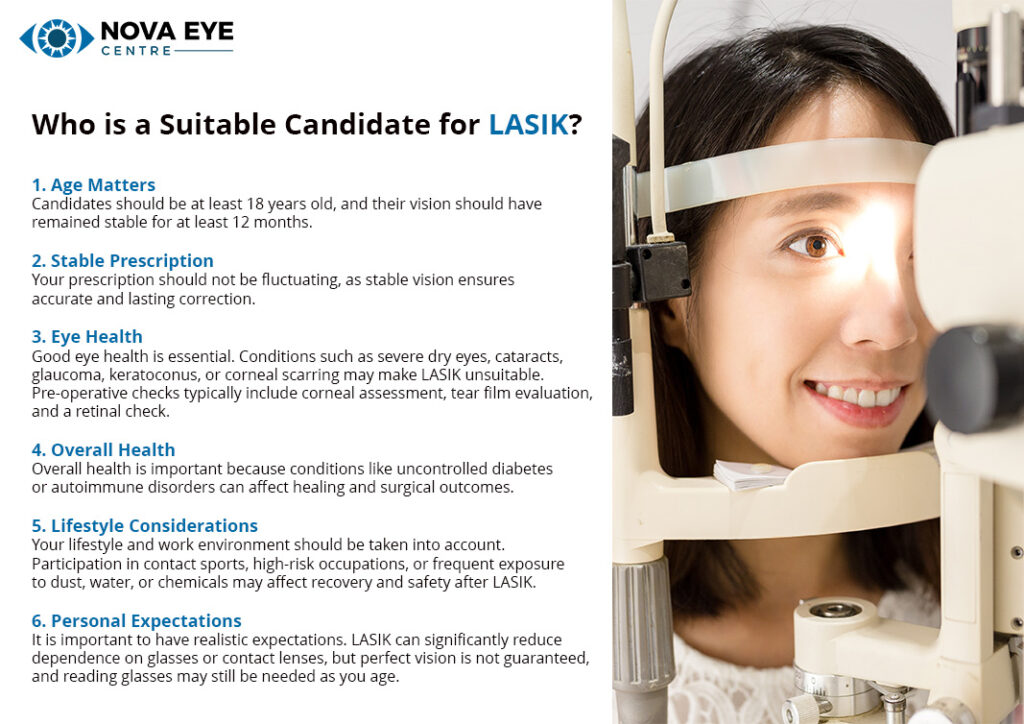
Before we dive into the details of LASIK surgery itself, it’s important to get a clear picture of who can actually benefit from the procedure. It is not a one-size-fits-all solution, and determining suitability is more than just looking at whether you wear glasses or contact lenses. A comprehensive evaluation by an eye specialist is necessary to determine whether the procedure is safe and likely to deliver positive results. Here are the key factors that specialists typically assess.
Age Matters
Usually, the candidates are 18 years or older. Vision in younger individuals can still change, which may affect the long-term results of surgery. Even in adults, specialists often look for a period of prescription stability, usually at least 12 months, to ensure the correction will remain effective.
Stable Prescription
One of the most important factors is the stability of your vision. If your prescription is still fluctuating, performing the surgery too early could result in undercorrection or overcorrection. Specialists may review your prescription history and may even repeat measurements over time before recommending surgery.
Eye Health
The condition of your eyes plays a major role in candidacy. Patients with certain issues, such as severe dry eyes, cataracts, glaucoma, keratoconus, or corneal scarring, may not be suitable for this procedure. These conditions can affect healing, the accuracy of the procedure, or overall visual outcomes. A detailed corneal assessment, tear film evaluation, and retinal check are typically part of the pre-operative screening.
Overall Health
Systemic conditions can also impact recovery and results. For instance, uncontrolled diabetes, autoimmune disorders, or other medical conditions that impair healing may make this procedure less ideal. Your eye specialist will review your general health and medications to assess any risks.
Lifestyle Considerations
Your daily activities and work environment may influence whether this procedure is a good choice. Individuals who participate in contact sports or occupations with a higher risk of eye trauma may need to consider alternative procedures or additional protective measures after surgery. Even something as simple as frequent exposure to dust, water, or chemicals may affect the healing process.
Personal Expectations
Understanding what this procedure can and cannot achieve is also key. While it can significantly reduce dependence on glasses or contacts, perfect vision is not guaranteed, and some patients may still need reading glasses as they age. Discussing expectations with your doctor allows you to have a realistic view of outcomes.
In short, being a suitable candidate goes beyond wanting clearer vision; it requires a combination of stable prescription, healthy eyes, general wellness, and a lifestyle that supports recovery. Only a comprehensive pre-operative assessment can confirm if this surgery is the right procedure for you.
How Much Does LASIK Cost in Singapore?
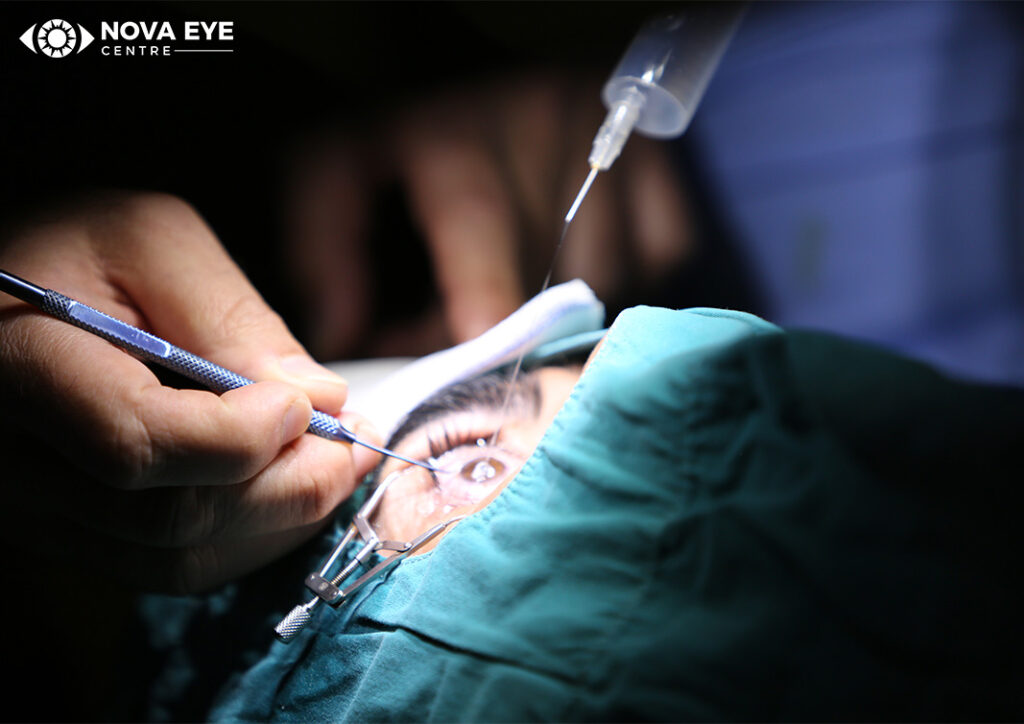
Once you’ve established whether you’re a suitable candidate for this procedure, the next practical question for many people is: how much is LASIK in Singapore? The cost can vary depending on the type of procedure, the technology used, and the eye specialist clinic or hospital you choose. Understanding these factors can help you plan your budget and compare options effectively.
- Standard LASIK (Bladeless) is one of the most common procedures. In Singapore, prices typically range from SGD $3,000 to $3,500. This procedure involves creating a thin corneal flap using a laser before reshaping the underlying corneal tissue. The exact price may vary based on the clinic’s location, equipment, and the experience of the surgeon performing the procedure.
- Advanced Surface Ablation (ASA) procedures, which include PRK, LASEK, and similar techniques, generally start at around SGD $3,000. These procedures differ from LASIK in that they do not involve creating a corneal flap. Instead, the outer layer of the cornea is removed before reshaping, which can be more suitable for certain patients with thinner corneas. Private clinics offering ASA procedures may charge higher fees depending on the level of technology and post-operative care included.
- ReLEx SMILE / SMILE Pro is another popular option, particularly for those looking for a minimally invasive procedure. Prices for this SMILE LASIK procedure usually range from approximately $3,500 onwards. This technique uses a femtosecond laser to remove a small lenticule from within the cornea, without creating a large flap. Costs can differ depending on the provider and the specific equipment used.
- Additional costs are also important to consider. Consultation fees, pre-operative assessments, prescribed medications, and follow-up appointments may add to the overall expense. Some clinics offer package deals that include these extras, while others may charge separately.
Ultimately, understanding how much LASIK is in Singapore requires more than looking at the base procedure fee. Comparing different clinics, asking about what is included in the price, and discussing your specific eye needs with a specialist will give you a clearer picture of the overall investment involved.
What Are the Differences Between the 3 Laser Vision Correction Procedures?
After considering candidacy and costs, now comes understanding the different laser vision correction options available in Singapore. While this surgery is often the procedure most people are familiar with, there are other techniques, each with its own approach, recovery timeline, and suitability considerations. Choosing the right procedure depends on your eye condition, corneal thickness, lifestyle, and personal preferences.
1. Advanced Surface Ablation (ASA)
Advanced Surface Ablation (PRK, Epi-LASIK, LASEK, TransPRK) is one of the earlier methods of laser vision correction. Unlike Bladeless LASIK, it does not involve creating a corneal flap. Instead, the outer layer of the cornea, known as the epithelium, is carefully removed before the laser reshapes the cornea to correct vision.
Because the epithelium needs time to regenerate, healing is slower compared to Bladeless LASIK, and patients may experience some discomfort during the initial recovery period. On the other hand, not having a flap reduces the risk of flap-related complications, which can make ASA procedures preferable for individuals with thinner corneas or those at higher risk of eye trauma.
2. Bladeless LASIK
Bladeless LASIK involves creating a thin corneal flap using either a femtosecond laser or a microkeratome. Once the flap is lifted, an excimer laser reshapes the underlying corneal tissue to correct refractive errors such as myopia, hyperopia, or astigmatism.
One of the advantages of this procedure is the faster recovery time; many patients notice an improvement in vision within 24 hours. Because the corneal flap acts as a natural bandage, post-operative discomfort is generally minimal, though temporary dryness or mild irritation can occur.
3. ReLEx SMILE
ReLEx SMILE is a newer, minimally invasive procedure that differs from both Bladeless LASIK and ASA techniques. Instead of creating a large flap, a femtosecond laser is used to remove a small lenticule of corneal tissue from within the cornea. The lenticule is extracted through a tiny incision, leaving most of the corneal surface intact.
This approach helps maintain corneal stability and reduces the risk of dry eyes compared to traditional vision corrective surgery. Recovery is generally quick, with many patients noticing significant improvement in vision within 24 hours. Patients may still require a short period of post-operative care to monitor healing.
Understanding the differences between these procedures allows patients to make an informed decision alongside their eye doctor. Factors such as corneal thickness, lifestyle, and tolerance for recovery time all play a role in determining which method is better suited for correcting vision.
What Happens During the Laser Vision Correction Procedure?
After exploring the different laser vision correction options, it’s helpful to understand what actually happens during the procedure. Eye surgery may sound daunting, but modern techniques are precise, minimally invasive, and designed for patient comfort.
At Nova Eye Centre, Advanced Surface Ablation (ASA) and ReLEx SMILE are the procedures most commonly performed by our eye specialists. Here’s how these two methods are carried out:
1. Advanced Surface Ablation (ASA)
- Preparation: Numbing eye drops are applied to ensure a painless procedure. The eye is cleaned, and patients are asked to focus on a target light for stability.
- Surface Removal: Instead of creating a flap, the outer corneal layer (epithelium) is carefully removed.
- Laser Reshaping: An excimer laser then reshapes the underlying corneal tissue to correct refractive errors such as myopia, hyperopia, or astigmatism.
- Healing: The epithelium gradually regenerates over several days. Patients may experience mild discomfort during this initial recovery period, but avoiding a flap reduces risks associated with flap complications.
2. ReLEx SMILE
- Preparation: Similar to ASA, the eyes are numbed and cleaned, and patients focus on a target light.
- Lenticule Creation: A femtosecond laser is used to create a small lenticule of corneal tissue within the cornea.
- Extraction: The lenticule is removed through a tiny incision, leaving the majority of the corneal surface intact.
- Recovery: This minimally invasive approach maintains corneal stability and lowers the risk of dry eyes. Recovery is generally quick, though follow-up care is needed to ensure optimal healing.
Overall, while the surgery may seem complex, the procedure is streamlined to prioritise safety, accuracy, and recovery. Knowing what each step involves can help patients feel more prepared and confident about the surgery.
What Are the Potential Risks and Side Effects?

While the corrective surgery is widely performed and considered safe, it is not without potential risks and side effects. Being aware of these factors helps patients make better decisions and prepare for post-operative care.
- Dry Eyes: One of the most common side effects is temporary dryness. This procedure can affect tear production, leading to irritation, a gritty sensation, or mild discomfort. This is usually managed with lubricating eye drops and tends to improve as the eyes heal over a few weeks to months.
- Visual Disturbances: Some patients may experience glare, halos, starbursts, or double vision, especially in low-light conditions. These effects are often temporary, but in rare cases, they may persist longer. Night driving or using digital devices in dim lighting can sometimes highlight these symptoms.
- Undercorrection or Overcorrection: Not every patient achieves perfect vision immediately. Some may experience undercorrection or overcorrection, meaning the desired visual clarity is not fully reached. In such cases, an enhancement procedure or additional corrective measures may be considered once the eyes have fully healed.
- Flap Complications: Since this procedure involves creating a corneal flap, there is a small risk of complications related to flap creation or healing. This can include flap displacement, wrinkles, or irregular healing patterns, though these occurrences are uncommon with the laser technology of today.
- Infection or Inflammation: Serious complications like infection or corneal inflammation are rare but possible. Strict post-operative care, including the use of prescribed eye drops and avoiding exposure to contaminants, significantly reduces these risks.
- Other Considerations: Patients with certain eye conditions or systemic health issues may be at higher risk for complications. Regular follow-up visits are important to monitor healing and address any concerns early.
Frequently Asked Questions
1. Is LASIK surgery painful?
Most patients experience minimal discomfort during LASIK surgery because numbing eye drops are applied before the procedure. Any post-operative discomfort, such as mild irritation or a gritty sensation, is usually temporary and can be managed with prescribed eye drops.
2. How long does it take to recover from this procedure?
Many patients notice improved vision within 24 hours after LASIK surgery. Full recovery and visual stabilisation may take several weeks, during which follow-up visits with the eye specialist are typically recommended.
3. Can LASIK correct age-related near vision loss (Presbyopia)?
Standard LASIK is primarily designed to correct myopia, hyperopia, and astigmatism, rather than presbyopia. However, options such as monovision LASIK or presbyLASIK may be considered for individuals experiencing age-related near vision loss, depending on their suitability.
Conclusion
LASIK surgery can offer a long-term solution for common vision problems such as myopia, hyperopia, and astigmatism, provided it is performed after a thorough pre-operative assessment. Suitability depends on factors like age, prescription stability, eye health, and overall medical conditions, making a professional evaluation essential before proceeding.
When it comes to the question of how much is LASIK in Singapore, the answer varies depending on the type of procedure, clinic, and additional services, so it is important to consider all related expenses when planning for surgery. While this procedure is generally safe, patients should be aware of potential side effects, including dry eyes, visual disturbances, and, in rare cases, flap complications, and discuss these with their eye specialist.
For those considering this procedure, consulting with an eye care professional is the best way to ensure the procedure aligns with your needs and expectations.
So, ready to take the next step? Schedule a consultation with Nova Eye Centre today to receive personalised advice, a comprehensive eye assessment, and guidance on the most suitable laser vision correction option for you. Clearer vision could be closer than you think.